- Blog
- May 13, 2026
Generative AI Adoption and the Talent Gaps Enterprises Must Address in 2026

- Blog
- May 13, 2026
Generative AI Adoption and the Talent Gaps Enterprises Must Address in 2026
Generative AI adoption is accelerating across industries as enterprises look to improve productivity, automate workflows, and enhance decision-making. Organizations are moving beyond experimentation and beginning to scale AI initiatives across departments such as customer service, operations, analytics, software development, and compliance.
However, as enterprises expand their AI initiatives, many are discovering that technology is not the biggest challenge. The real barrier is talent. Scaling generative AI requires specialized skills that many organizations currently lack, creating gaps that slow implementation, increase risk, and limit business outcomes.
As the demand for AI-driven transformation grows in 2026, enterprises must rethink how they build and manage AI talent to support long-term success.
Why Talent Is Becoming the Biggest Barrier to Generative AI Adoption
Many organizations have already invested in AI platforms, cloud infrastructure, and data modernization initiatives. Yet despite these investments, enterprises often struggle to operationalize generative AI at scale due to workforce limitations.
The rapid evolution of AI technologies has created demand for highly specialized roles that traditional IT and data teams may not fully support. Enterprises are not only competing for AI talent in an increasingly competitive market, but they are also trying to keep pace with evolving skill requirements, governance expectations, and implementation complexity.
Without the right expertise, AI initiatives may remain limited to pilots, resulting in delayed ROI, inconsistent outputs, and increased operational risks. This is making talent readiness a critical factor in successful generative AI adoption.
The Critical AI Talent Gaps Enterprises Must Address in 2026
As generative AI adoption grows, several specialized roles are becoming essential for enterprise success.
- AI/ML EngineersAI and machine learning engineers play a foundational role in building, deploying, and optimizing AI models. They are responsible for integrating AI systems into enterprise environments, improving model performance, and ensuring scalability across applications and workflows.
- Prompt EngineersPrompt engineers help organizations optimize how users and systems interact with generative AI models. By designing effective prompts and refining AI outputs, they improve response accuracy, usability, and overall business value.
- Model EvaluatorsAs enterprises rely more heavily on AI-generated outputs, the need for model evaluation is increasing. These specialists assess model accuracy, consistency, bias, and reliability to ensure AI systems deliver trustworthy and high-quality results.
- Compliance-Focused AI SpecialistsAI adoption also introduces governance, security, and regulatory concerns. Compliance-focused AI specialists help organizations establish responsible AI practices, manage risk, and ensure alignment with evolving regulatory requirements and enterprise policies.
Together, these roles form the foundation of an enterprise-ready AI workforce capable of supporting scalable and responsible AI adoption.
Why Traditional Hiring Models Are Falling Short
Traditional hiring approaches are struggling to keep up with the speed of generative AI adoption. Many organizations still rely on long recruitment cycles and rigid hiring structures that are not suited for rapidly evolving AI skill requirements.
At the same time, competition for experienced AI professionals continues to increase, making it difficult for enterprises to secure specialized talent quickly. In many cases, organizations also face challenges in accurately identifying and evaluating emerging AI skills during the hiring process.
As AI technologies continue to evolve, relying solely on conventional hiring methods can slow innovation and limit an organization’s ability to scale AI initiatives effectively.
How Hybrid Staffing Models Help Close AI Talent Gaps
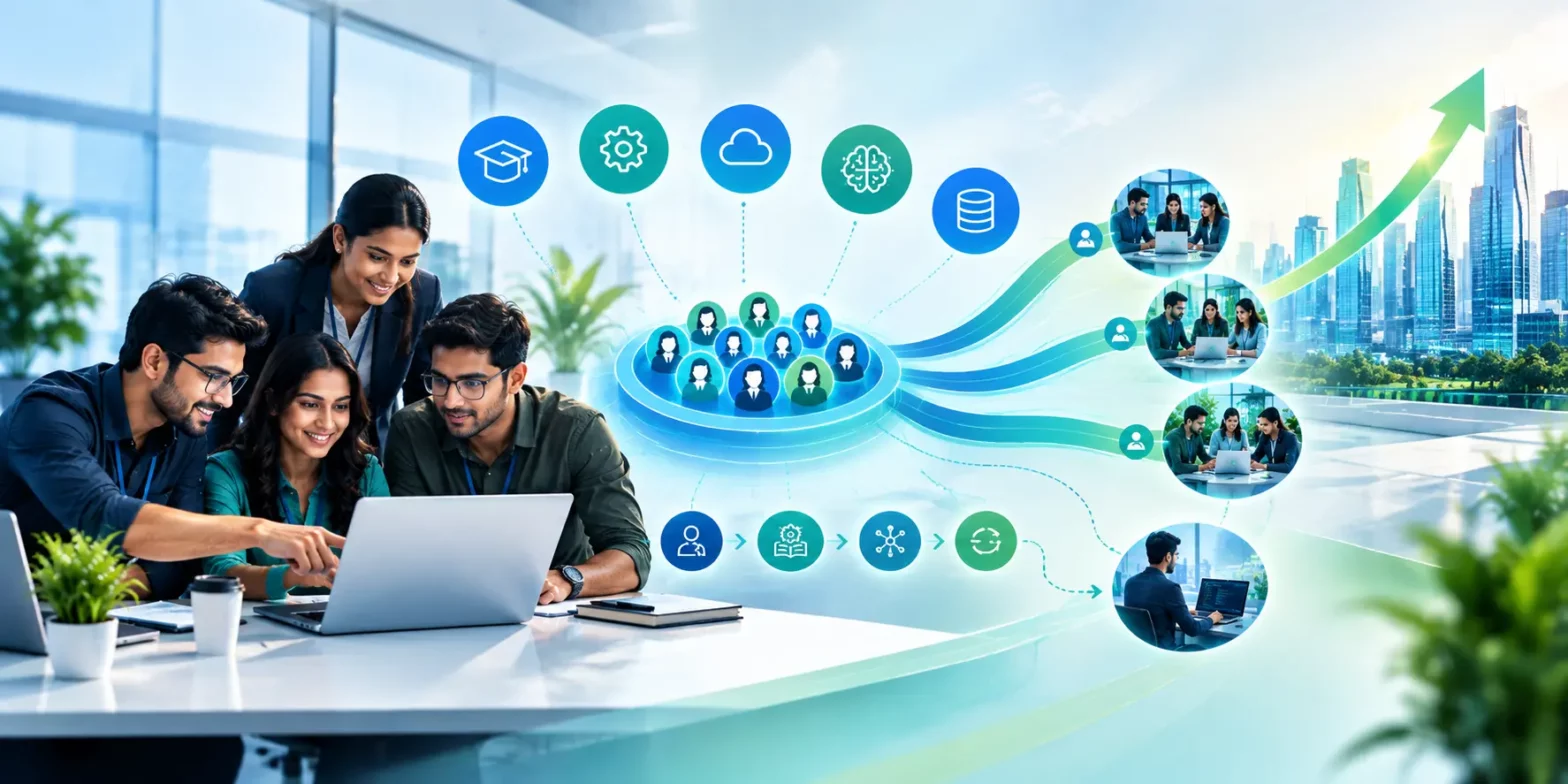
To address these challenges, enterprises are increasingly adopting hybrid staffing models that combine internal teams with external AI specialists. This approach provides greater flexibility and enables organizations to access niche expertise without the delays associated with traditional hiring.
Hybrid staffing models allow businesses to scale teams based on project requirements while maintaining operational agility. Organizations can quickly bring in AI/ML engineers, prompt engineers, governance experts, and other specialists to accelerate implementation and reduce skill gaps.
This model also supports knowledge transfer and collaboration between internal and external teams, helping enterprises strengthen long-term AI capabilities while delivering immediate business value.
Building an Enterprise Workforce Strategy for Generative AI
Successfully scaling generative AI requires more than filling individual roles, it demands a structured workforce strategy aligned with business goals. Organizations should focus on:
- Aligning AI talent with business priorities: Ensure AI initiatives directly support operational goals, customer experience improvements, and measurable business outcomes.
- Investing in continuous upskilling: As AI technologies evolve rapidly, organizations must continuously develop employee capabilities through training, certifications, and hands-on experience.
- Strengthening AI governance and compliance readiness: Establish clear frameworks to manage security, ethics, compliance, and responsible AI usage across the enterprise.
- Encouraging cross-functional collaboration: AI adoption requires collaboration between technology teams, business leaders, compliance functions, and operational stakeholders to ensure successful implementation.
Organizations that build flexible and future-ready AI workforce strategies will be better positioned to scale AI initiatives successfully and maintain a competitive advantage.
Conclusion
Generative AI is rapidly transforming how enterprises operate, innovate, and compete. However, the success of these initiatives depends not only on technology investments but also on access to the right talent and expertise.
As organizations move toward enterprise-scale AI adoption in 2026, addressing specialized talent gaps will become a strategic priority. Enterprises that adopt flexible workforce strategies, invest in continuous skill development, and strengthen AI governance will be better equipped to unlock the full value of generative AI.
Partnering with experienced talent providers can help organizations access specialized AI expertise faster and accelerate AI-driven transformation with greater confidence.