- Blog
- June 2, 2026
The Future of IT Operations: AI-Driven Infrastructure & AIOps Workforce Models
- Blog
- June 2, 2026
The Future of IT Operations: AI-Driven Infrastructure & AIOps Workforce Models
Enterprise IT environments are becoming increasingly complex as organizations manage hybrid cloud infrastructure, distributed applications, real-time operations, and growing volumes of operational data. Traditional IT operations models often struggle to keep pace with the speed, scale, and operational demands of modern digital environments.
This shift is accelerating the adoption of AI-driven infrastructure and AIOps, where artificial intelligence and automation are used to improve monitoring, optimize performance, predict issues, and automate operational workflows. However, as enterprises modernize IT operations, workforce transformation is becoming just as important as technology adoption.
In 2026, organizations are realizing that successful AIOps strategies require new workforce models built around specialized skills, operational collaboration, and human oversight alongside intelligent automation.
The Shift Toward AI-Driven IT Operations
Modern IT operations now involve managing cloud platforms, on-premises infrastructure, enterprise applications, APIs, security systems, and distributed workloads across multiple environments. As these ecosystems continue to expand, manual monitoring and traditional operational processes are becoming increasingly difficult to manage efficiently.
AIOps is helping organizations address these challenges by using AI and machine learning to analyze operational data, detect anomalies, automate incident responses, and improve infrastructure visibility. Enterprises are using AI-driven operations to reduce downtime, improve system reliability, and support faster decision-making across IT environments.
Predictive monitoring and automated remediation are also becoming more common. Instead of diagnosing system outages after the fact, enterprises can utilize smart automation to uncover and remediate infrastructure degradation before it impacts operations.
As enterprise infrastructure becomes more dynamic and interconnected, IT operations are evolving from reactive management models to more intelligent, automated, and data-driven operational environments.
Why AIOps Requires a New Workforce Model
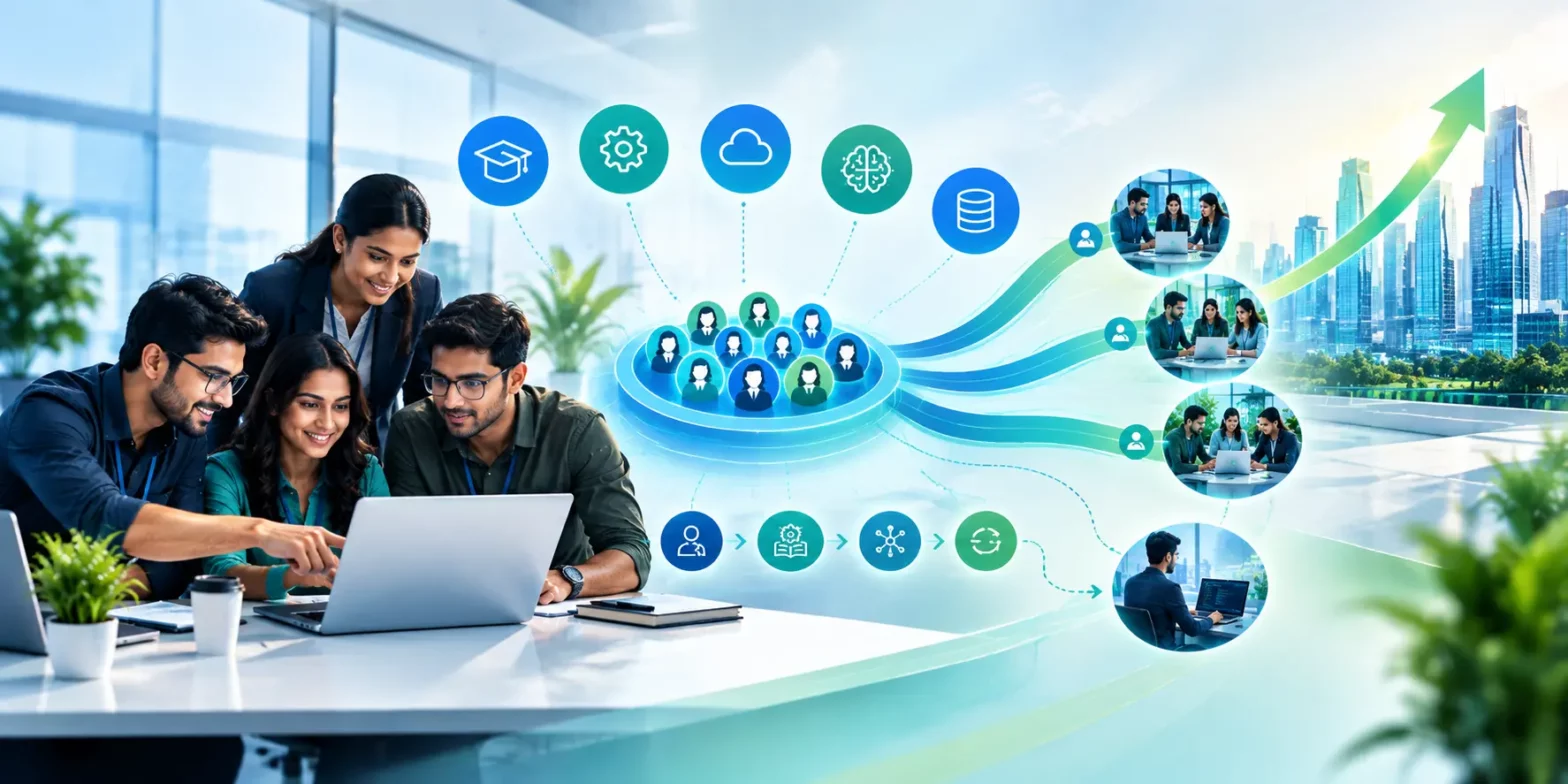
As AIOps adoption grows, enterprises are restructuring IT operations teams to support more intelligent and automated infrastructure environments.
AI Operations Specialists
AI operations specialists help organizations manage AI-driven monitoring systems, operational analytics, and automation workflows. They play an important role in ensuring AI-driven operational tools remain accurate, efficient, and aligned with business objectives.
Cloud Infrastructure Engineers
Modern infrastructure environments require professionals who understand cloud platforms, distributed systems, scalability, and hybrid infrastructure management. Cloud engineers assist organizations in preserving operational efficiency amid constantly evolving infrastructure demands.
Site Reliability Engineering (SRE) and Observability Teams
SRE and observability teams help organizations improve system reliability, monitor operational health, and manage infrastructure performance across complex enterprise environments. Their role becomes increasingly important as enterprises scale automated operations.
Automation Engineers
Automation engineers design workflows that reduce manual operational effort and improve infrastructure efficiency. They help enterprises implement automated remediation, orchestration, and operational optimization across IT environments.
Governance and Security Teams
As AI becomes more integrated into operational systems, governance and security teams help manage compliance, operational accountability, access controls, and infrastructure security across AI-driven environments.
Together, these roles support the transition toward more intelligent and scalable IT operations models.
How Human and AI Collaboration Is Reshaping IT Operations
AIOps is not designed to replace IT teams entirely. Instead, it is helping organizations create more collaborative operational environments where AI supports human decision-making and operational management.
AI-driven systems can process large volumes of operational data, identify anomalies, automate repetitive tasks, and provide real-time recommendations. At the same time, human teams continue to play a critical role in strategic planning, infrastructure governance, risk management, and handling complex operational scenarios.
A growing number of companies are implementing collaborative frameworks that leverage AI to boost visibility and streamline workflows. This shift allows IT experts to pivot toward higher-value tasks like optimization, creative development, and future-proof infrastructure strategy.
As AIOps environments mature, the ability to combine intelligent automation with skilled operational teams will become a major differentiator for enterprise IT performance and resilience.
Building Workforce Strategies for AIOps in 2026
To scale AIOps successfully, organizations must align workforce planning with evolving operational and infrastructure requirements.
Enterprises should focus on:
- Upskilling operational teams: IT professionals need expertise in cloud operations, automation frameworks, AI-driven monitoring, analytics, and observability tools to support modern infrastructure environments.
- Building cross-functional operations teams: Successful AIOps initiatives require collaboration between infrastructure teams, cloud engineers, security specialists, SRE teams, and operational leaders.
- Adopting flexible staffing strategies: Many organizations are using hybrid staffing approaches to access specialized infrastructure and automation expertise while maintaining operational agility.
- Supporting continuous operational optimization: AIOps environments require ongoing monitoring, workflow refinement, and operational improvements to maintain long-term performance and reliability.
Organizations that align intelligent operations with scalable workforce strategies will be better positioned to improve operational resilience, reduce downtime, and support long-term digital transformation goals.
Conclusion
AI-driven infrastructure and AIOps are reshaping enterprise IT operations in 2026 by enabling more intelligent monitoring, predictive operations, and automated infrastructure management. As enterprise environments become more complex, organizations are increasingly relying on AI-driven operations to improve scalability, performance, and operational efficiency.
However, long-term AIOps success depends on more than automation technologies alone. Enterprises also need skilled operational teams capable of managing intelligent infrastructure environments, maintaining governance, and optimizing operational performance at scale.
Organizations looking to strengthen modern IT operations can benefit from experienced partners like MSR Technology Group, with expertise in workforce strategy, specialized infrastructure talent, and enterprise transformation support.