- Blog
- September 23, 2026
How to Build a Resilient Bench Strategy for Fast-Scaling Tech Teams

- Blog
- September 23, 2026
How to Build a Resilient Bench Strategy for Fast-Scaling Tech Teams
Scaling a technology team is no longer simply about adding more people. Organizations need the right skills available when projects accelerate, priorities shift, or new technology requirements emerge. Without forward-looking workforce planning, teams can face longer hiring cycles, delivery pressure, capability gaps, and increased workloads for existing employees.
A resilient bench strategy for fast-scaling tech teams helps organizations prepare for these changes before demand becomes urgent. Rather than maintaining a large pool of idle talent, the goal is to create a workforce model that combines skills forecasting, ready talent, continuous development, redeployment, and flexible staffing.
Why a Resilient Bench Strategy Matters
A well-managed bench provides organizations with additional workforce flexibility when technology demand changes. Its value can be understood across three areas:
- Workforce continuity: Access to ready talent helps organizations respond when projects expand, new initiatives begin, or critical skills become unavailable.
- Delivery speed: Pre-vetted and prepared professionals can reduce the time required to build project capacity and help teams respond faster to changing requirements.
- Cost efficiency: Better visibility into available skills and upcoming demand can improve utilization while reducing unnecessary hiring and prolonged idle capacity.
The objective should not be to eliminate bench time completely. Maintaining some ready capacity can provide strategic flexibility. The challenge is ensuring that bench talent remains relevant, engaged, and aligned with expected demand rather than becoming unmanaged idle capacity.
Forecasting Skills and Building a Ready Talent Pool
A resilient bench starts with understanding what skills the organization is likely to need next. Workforce planning should consider upcoming projects, application modernization initiatives, cloud migrations, data and AI programs, customer commitments, and expected changes in existing assignments.
Organizations can use a 30–90 day planning horizon as a practical example, adjusting it based on project complexity and hiring requirements. The goal is to identify potential skill gaps early enough to develop, redeploy, or source talent before the requirement becomes critical.
Forecasting becomes more effective when connected to a ready talent pool. Instead of maintaining a generic candidate database, organizations can segment available talent by:
- Technical skills and certifications
- Role and experience level
- Industry or domain knowledge
- Previous project experience
- Availability and deployment readiness
Pre-vetting adds another layer of readiness. Technical assessments, structured interviews, and relevant experience verification can provide stronger evidence that candidates are aligned with anticipated roles.
AI-supported skills matching can further help organizations compare project requirements with internal and external talent. However, technology should support workforce decisions rather than replace technical and business judgment.
Turning Bench Time Into Talent Readiness
Bench time becomes more valuable when it is used to prepare professionals for upcoming opportunities. Instead of viewing every non-billable period as lost utilization, organizations can use that time to strengthen capabilities that are likely to be needed.
Upskilling and certifications can prepare employees for emerging technology requirements. Internal projects can provide practical experience while improving organizational tools or processes. Experienced professionals can also contribute to pre-sales, solution design, technical demonstrations, or knowledge development.
Skills visibility is equally important. Maintaining current profiles of technical capabilities, certifications, project experience, and learning progress makes redeployment easier when new opportunities appear.
The result is a shift from simply managing bench utilization to actively managing talent readiness.
Scaling Beyond the Bench
An internal bench alone may not be enough when demand increases rapidly or highly specialized skills are required. A resilient workforce strategy should therefore combine internal readiness with flexible access to external talent.
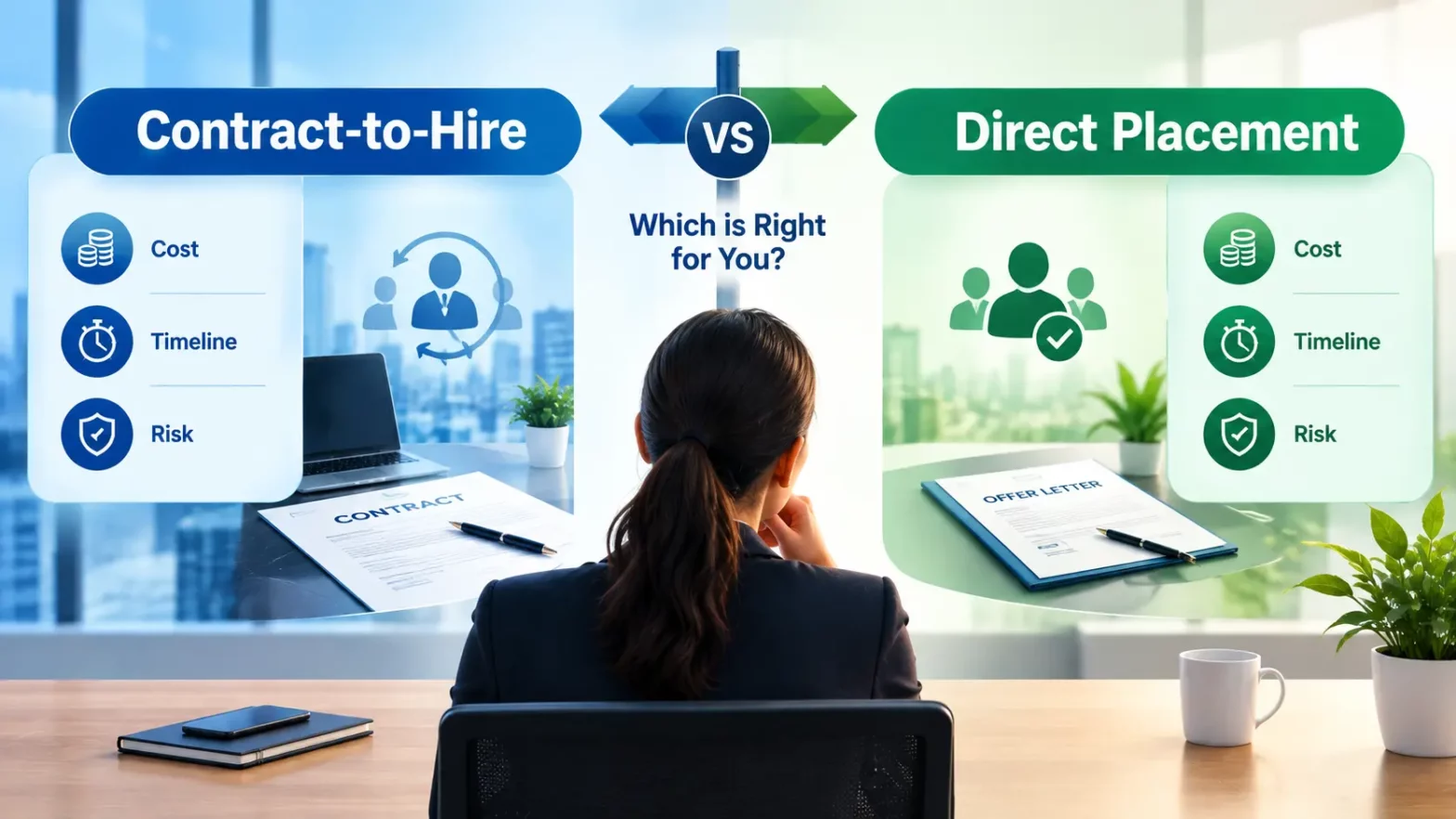
Contract staffing and staff augmentation can provide additional capacity for changing project requirements. Contract-to-hire can support situations where organizations want to evaluate longer-term requirements or fit before making a permanent commitment. Project-based talent can also provide specialized expertise for defined initiatives.
Modular teams and parallel talent pipelines provide additional flexibility. Instead of rebuilding a team every time demand changes, organizations can maintain access to qualified professionals across recurring skill areas and expand capacity when required.
The effectiveness of the strategy can be evaluated through measures such as time to redeployment, time to productivity, skills readiness, retention, utilization, and delivery outcomes. These measures help organizations understand whether their bench is actually improving workforce responsiveness rather than simply increasing available headcount.
Conclusion
A resilient bench strategy is not about keeping a large workforce waiting for the next assignment. It is about creating the skills visibility, talent readiness, and workforce flexibility needed to respond as technology demand changes.
Fast-scaling organizations can strengthen workforce resilience by forecasting future skills, maintaining pre-vetted talent pools, using bench time for capability development, and combining internal talent with flexible staffing models. MSR Technology Group helps organizations build scalable technology teams through IT staffing, contract staffing, contract-to-hire, staff augmentation, and workforce solutions aligned with changing business and technology requirements.